
Few people have been able to express what makes a great photograph more eloquently than Australian photographer Peter Adams:
“Great photography is about depth of feeling, not depth of field.”
We are told that telling a story is a powerful way to evoke feelings.
Narrative is one of the essential elements of good photography, and yet, many disregard it completely. Partly because it is an abstract concept, and partly because it is so bloody difficult.
But to be a photographer is to be a storyteller. And one of the most effective ways to become a better photographer is to stop taking photos and start telling stories.
When a Single Photo Isn’t Enough
Anyone who has ever tried to tell a story with their photographs will tell you it’s not as easy as it sounds.
One problem is that people often interpret our photographs in different ways. Feelings are deeply personal, often shaped by our past experiences. To a certain extent, we have little control over how a photograph will be received.
Joseph Goebbels was an awful human being, but an effective communicator. As the Nazi propaganda minister, he understood the power of keeping a message simple and repeating it. He used that power to spread hatred, with devastating consequences.
A single photograph gives us just one chance to get our message across. But what about two? Or even three?
Repetition, Repetition, Repetition
If we take one lesson from Goebbels’ methods, it is this: decide what you want to say, then find as many opportunities as possible to say it.
Ladies and gentlemen, I give you the photography project.
Often, we use projects to tell stories that are too big for a single photograph. But a project also gives us the opportunity to repeat an idea in different images, making our message harder to miss.
If a picture paints a thousand words, perhaps it takes a thousand pictures to paint just one.
Greater than the Sum of its Parts
Combining multiple images into a single body of work amplifies the message behind each individual photograph.
Each photograph builds on the one that came before. The more times we repeat a story, the less open it is to interpretation and the clearer the message.
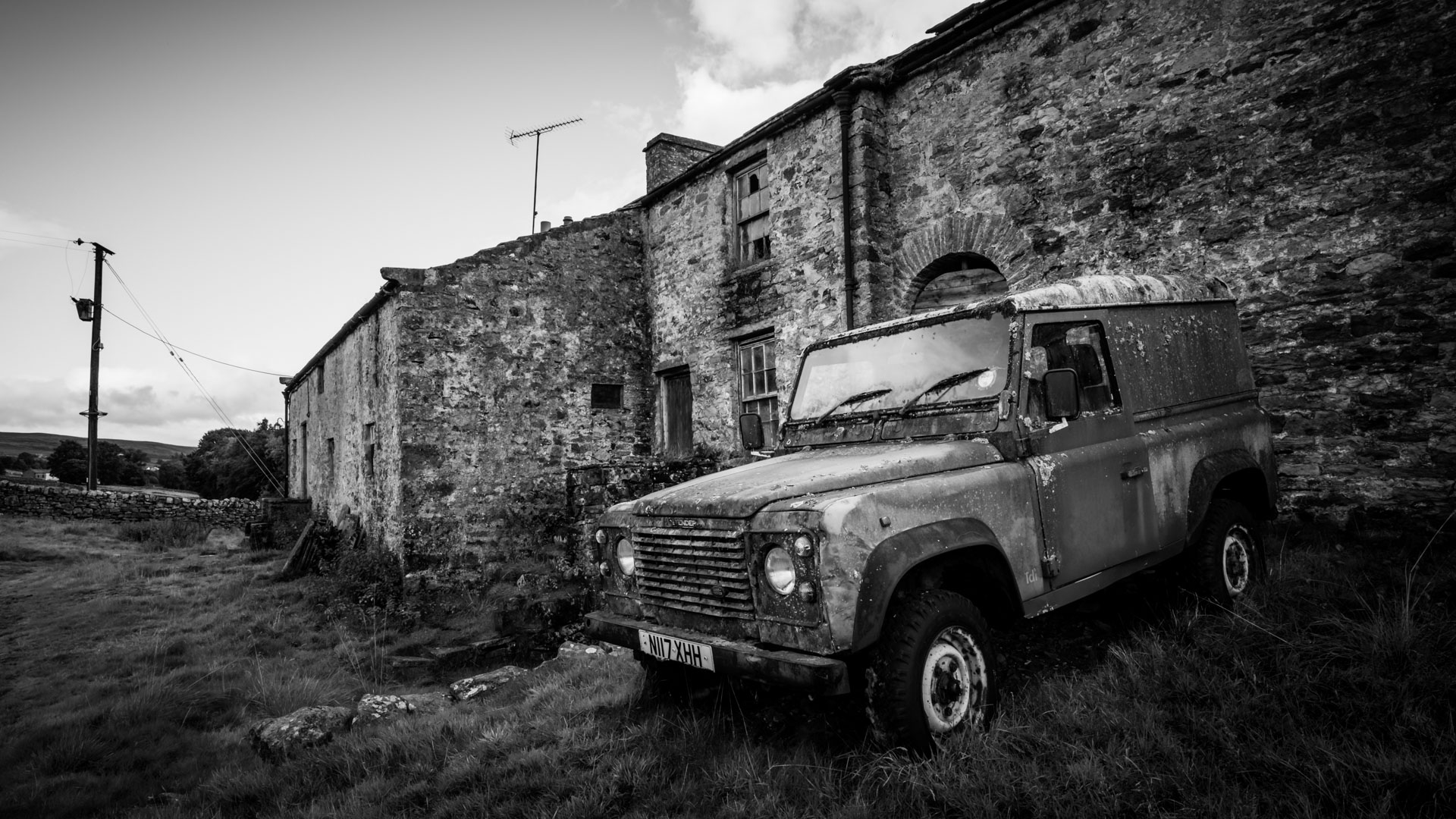
A photograph of a crumbling barn suggests abandonment. Add images of an overgrown lime kiln, a disused viaduct, and a forgotten church, and a larger story emerges: how our heritage is being left to decay.
The power of a project lies not only in the depth of narrative but in the clarity of the point we’re trying to make.
Narrative matters. It gives a photograph something to say and the viewer something to feel. But even when we know the story we want to tell, conveying it in a single image can be difficult.
A photography project gives us another way. By returning to the same idea across different images, we can repeat our message and make it clearer with every frame.
So, when one photograph doesn’t quite say what you mean, don’t give up on the story. Give it more photographs.
Leave a Reply